定义:#
Tool是agents调用来执行操作的组件,通过定义良好的输入和输出来让模型和外部世界交互
Tools封装了一个可调用的函数及其输入模式,允许模型决定什么时候调用Tools以及传入的参数
Tool主要用语言:
- 信息检索:与外部数据源进行交互检索信息,如数据库和Web搜索引擎.主要目标是增强model的知识,使其能够回答原本无法回答的问题
- 执行操作:目标是自动化原本需要人工干预或者显式编程的任务
ps:Toolc calling称为model能力但是实际上由客户端提供ToolCalling逻辑
Quick Start#
两个示例:一个信息检索,一个执行操作
信息检索#
在DataTimeTool类中实现一个Tool来获取日期和时间(此处不关心具体实现方式)
 1
 2
 3
 4
 5
 6
 7
 8
 9
10
11
12
| import java.time.LocalDateTime;
import org.springframework.ai.tool.annotation.Tool;
import org.springframework.context.i18n.LocaleContextHolder;
class DateTimeTools {
@Tool(description = "Get the current date and time in the user's timezone")
String getCurrentDateTime() {
return LocalDateTime.now().atZone(LocaleContextHolder.getTimeZone().toZoneId()).toString();
}
}
|
如何让LLM了解到这个Tool的存在:通过调用Chatclient的tool()方法通知LLM
注意 tool(datetimetool)中的datetimetool需要实例化(也就你JAVA这么多事)
 1
 2
 3
 4
 5
 6
 7
 8
 9
10
| ChatModel chatModel = ...;
String response = ChatClient.create(chatModel)
.prompt("What day is tomorrow?")
.tools(new DateTimeTools())
.call()
.content();
System.out.println(response);
// 输出:Tomorrow is 2015-10-21.
|
执行操作#
和上面差不多自己看了
 1
 2
 3
 4
 5
 6
 7
 8
 9
10
11
12
13
14
15
16
17
18
19
| import java.time.LocalDateTime;
import java.time.format.DateTimeFormatter;
import org.springframework.ai.tool.annotation.Tool;
import org.springframework.context.i18n.LocaleContextHolder;
class DateTimeTools {
@Tool(description = "Get the current date and time in the user's timezone")
String getCurrentDateTime() {
return LocalDateTime.now().atZone(LocaleContextHolder.getTimeZone().toZoneId()).toString();
}
@Tool(description = "Set a user alarm for the given time, provided in ISO-8601 format")
void setAlarm(String time) {
LocalDateTime alarmTime = LocalDateTime.parse(time, DateTimeFormatter.ISO_DATE_TIME);
System.out.println("Alarm set for " + alarmTime);
}
}
|
那么有的同学就要问了:
这里只调用了datetimetool类而不是具体的工具,他是怎么知道选择哪个方法的
这就是你SpringAI叔叔的强大之处了,@Tool:会将该方法自动注册为一个tool
所以你们臭学JAVA的还不好好学Spring,Spring Boot,Spring MVC?
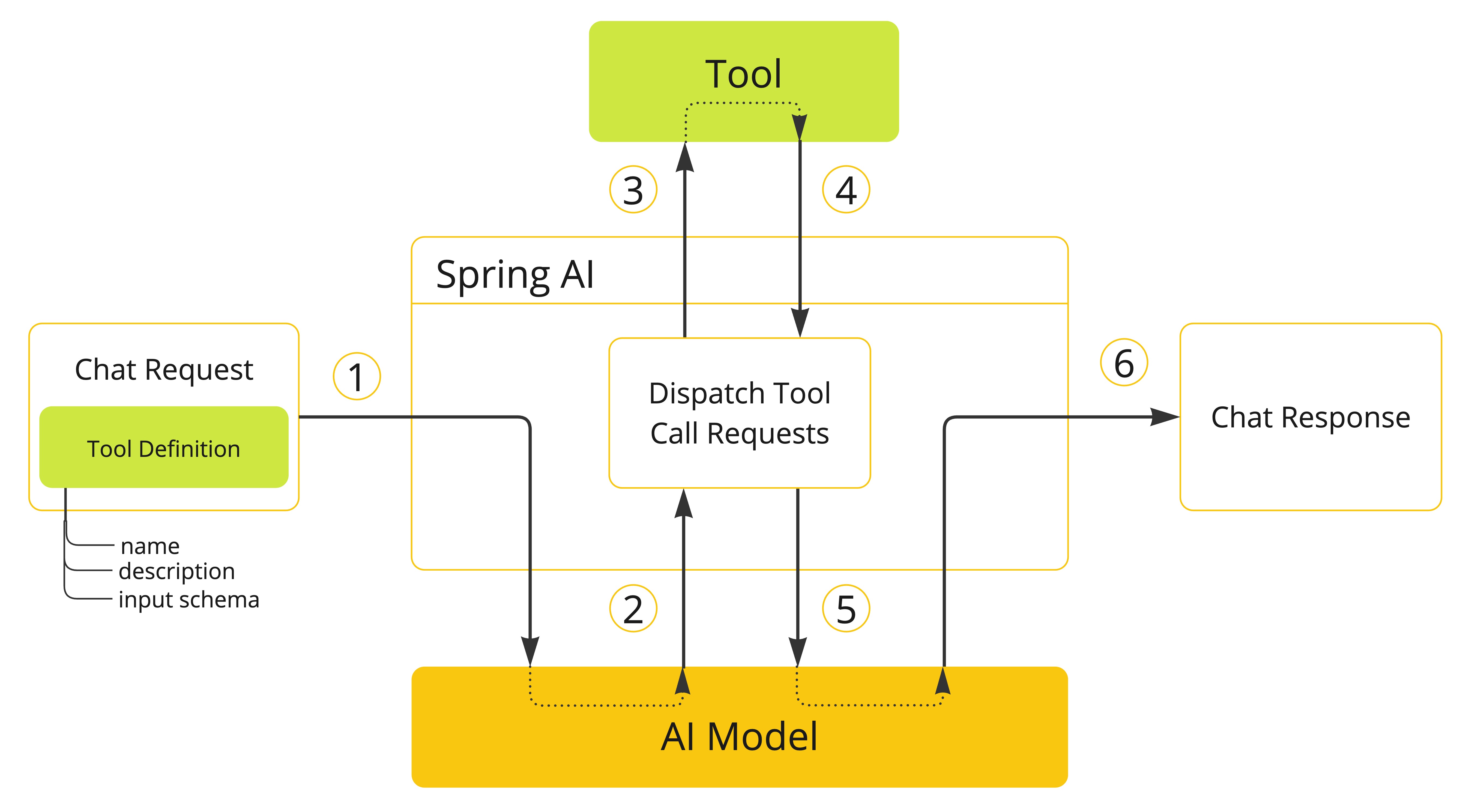
1.Tool定义:名称,描述和传入参数
2.调用:Model发送带有Tool名称和参数的相应
3.通过名称选择tool并传入参数执行
4.toolcall结果由程序处理
5.结果传回Model
6.Model根据结果作为附加上下文生成最终响应
Tools 是 tool calling 的构建块,它们由 ToolCallback 接口建模。Spring AI 提供了从方法和函数指定 ToolCallback(s) 的内置支持,但您始终可以定义自己的 ToolCallback 实现以支持更多用例。
ChatModel 实现透明地将 tool call 请求分派到相应的 ToolCallback 实现,并将 tool call 结果发送回 model,最终生成最终响应。它们使用 ToolCallingManager 接口来执行此操作,该接口负责管理 tool 执行生命周期。
ChatClient 和 ChatModel 都接受 ToolCallback 对象列表,以使 tools 可用于 model 和最终执行它们的 ToolCallingManager。
除了直接传递 ToolCallback 对象外,您还可以传递 tool 名称列表,这些名称将使用 ToolCallbackResolver 接口动态解析。
创建工具#
Spring AI提供了两种从方法指定Tools(即ToolCallback(s))的内置支持
- 声明式:使用@Tool注解
- 编程式:使用低级MethodToolCallback实现
1
2
3
4
5
6
7
8
| class DateTimeTools {
@Tool(description = "Get the current date and time in the user's timezone")
String getCurrentDateTime() {
return LocalDateTime.now().atZone(LocaleContextHolder.getTimeZone().toZoneId()).toString();
}
}
|
@Tool注解允许你提供的信息:
- name:如果未提供,将使用方法名称
- description:tool描述;若未提供,使用方法名称代替.但是强烈建议详细描述,对于model理解tool的用途以及when to use and how to use很重要
- returnDirect:结果是否直接传回model;为布尔值
- resultConverter:将toolcall的结果转化为String Object以
ToolCallResultConverter 实现
NOTE: Spring AI 为 @Tool 注解方法的 AOT 编译提供内置支持,只要包含方法的类是 Spring bean(例如 @Component)。否则,您需要向 GraalVM 编译器提供必要的配置。例如,通过用 @RegisterReflection(memberCategories = MemberCategory.INVOKE_DECLARED_METHODS) 注解类。
如果方法返回值,返回类型必须是可序列化类型,因为结果将被序列化并发送回 model。
@ToolParam 注解可用于提供有关输入参数的附加信息,例如描述或参数是必需还是可选的。默认情况下,所有输入参数都被视为必需
 1
 2
 3
 4
 5
 6
 7
 8
 9
10
11
12
13
14
| import java.time.LocalDateTime;
import java.time.format.DateTimeFormatter;
import org.springframework.ai.tool.annotation.Tool;
import org.springframework.ai.tool.annotation.ToolParam;
class DateTimeTools {
@Tool(description = "Set a user alarm for the given time")
void setAlarm(@ToolParam(description = "Time in ISO-8601 format") String time) {
LocalDateTime alarmTime = LocalDateTime.parse(time, DateTimeFormatter.ISO_DATE_TIME);
System.out.println("Alarm set for " + alarmTime);
}
}
|
@ToolParam允许你提供的有关tool参数的关键信息:
description:参数的描述,model 可以使用它来更好地理解如何使用它。例如,参数应该是什么格式,允许什么值等。required:参数是必需还是可选的。默认情况下,所有参数都被视为必需。